Profile the concrete.
Mechanical diamond grinding prepares the surface for the specified coating. Existing paint, incompatible finishes and contaminants are reviewed as part of the preparation scope.
 Surface & Finish Specialists
Seamless finishes. Considered preparation. A garage that feels like part of your home.
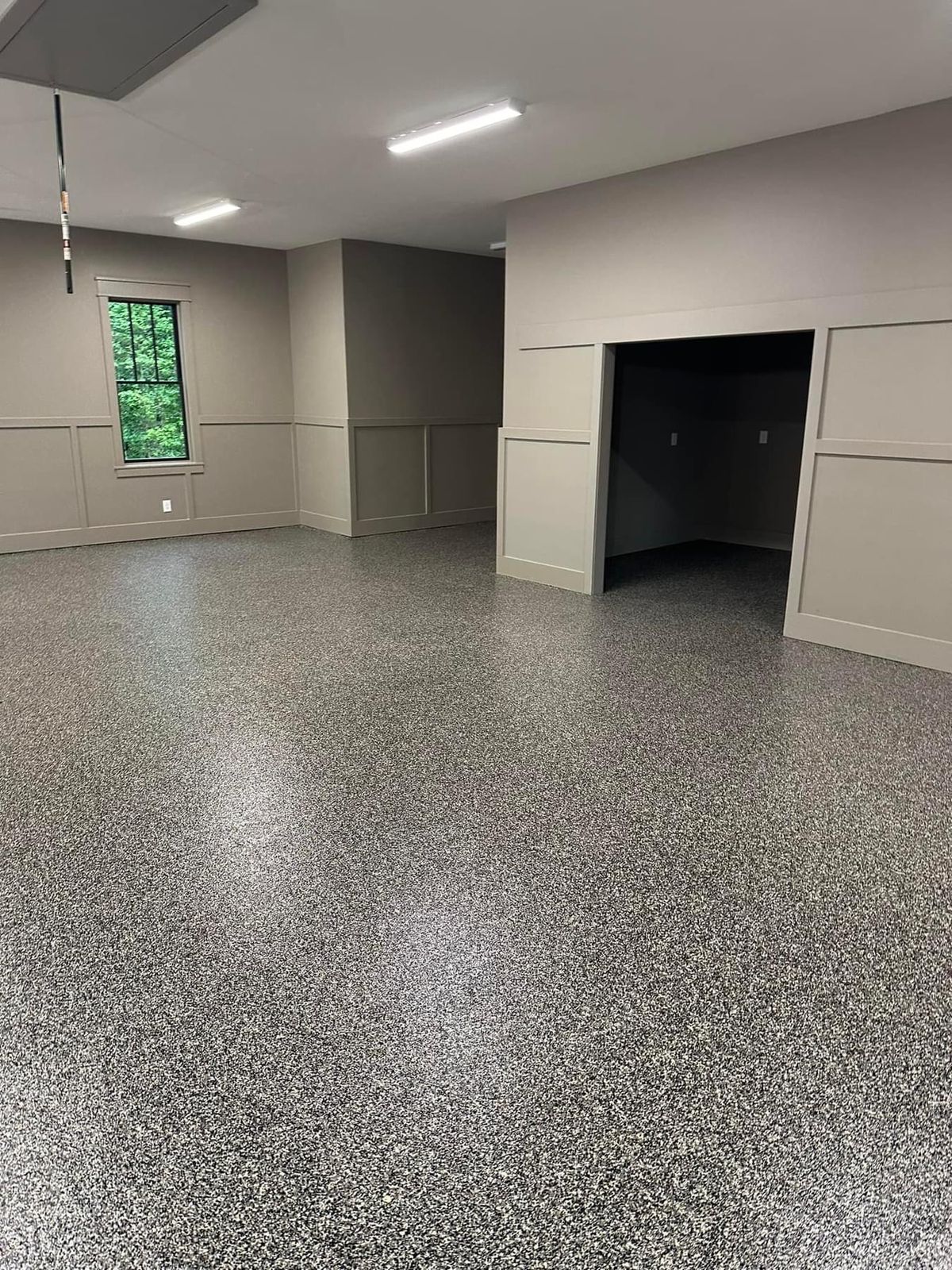
Epoxy is a resin-and-hardener coating applied to prepared concrete. As it cures, it forms a hard surface that changes the appearance of the slab and helps protect it from everyday wear.
Garage floors often combine an epoxy base, decorative flakes and a polyaspartic topcoat. Each layer has a different job. Preparation, product compatibility and the condition of the concrete determine the system that belongs in your space.
Planning a commercial epoxy floor? ↗Epoxy, flakes and polyaspartic are often used together. This is an example flake system; the exact layers are confirmed for your concrete and selected package.
See how we install it ↓The slab is assessed, mechanically prepared and cleaned. Repairs and moisture treatment are specified where needed.
A compatible base coat creates the foundation for the decorative and protective layers.
Vinyl flakes add color and visual texture. The broadcast pattern and blend shape the final appearance.
The finishing coat seals the selected system. Review its wear, chemical and UV-resistance specifications.
Peeling, bubbling or poor adhesion can begin with an unsuitable surface or system. We review the slab before choosing what goes on top.
Mechanical diamond grinding prepares the surface for the specified coating. Existing paint, incompatible finishes and contaminants are reviewed as part of the preparation scope.
Moisture testing, crack inspection and joint details guide the repair and treatment plan. Discuss signs of water intrusion and any previous coating failure.
Vehicle traffic, sunlight, winter salt, cleaning and traction needs help shape the coating choice. Product instructions guide application and cure times.
Choose the look first, then refine the coating system and texture around the garage’s everyday use.

A simple, consistent color for garages, storage and utility spaces. Discuss sheen and traction options for the selected coating.
Explore solid color finishes ↗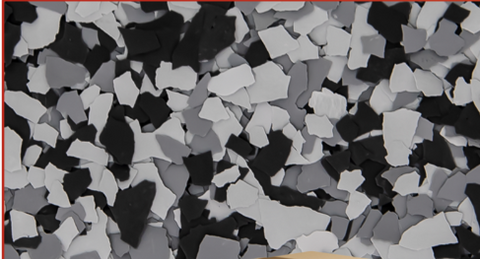
Multi-tone vinyl flakes create a distinctive finish. Compare blend, broadcast coverage and topcoat texture using a physical sample.
Explore decorative flake finishes ↗
Pigments create movement and depth, with patterns formed during application. Review a sample and the expected variation before confirming the design.
Explore metallic finishes ↗Planning ranges for approximately 400–500 sq ft. Your written estimate accounts for the slab, repairs, moisture treatment, layout and finish. Larger or more complex projects can cost more.
For utility-focused garages and a simple, uniform finish.
For a decorative garage floor with a full flake finish.
For a premium flake finish with additional preparation and coating layers.
For flowing metallic patterns in garages, showrooms and interior spaces.
Final preparation, layer specifications, product availability and any warranty terms are confirmed in the project proposal. These ranges are not a fixed-price booking.
Explore Mago’s colors and flake blends. Solid colors are illustrated without flakes. Screen colors are approximate; confirm the physical sample and product availability before ordering.
Explore flake and metallic finishes. Move the slider to compare the surfaces; each project’s result depends on its concrete and selected system.

 BeforeAfter
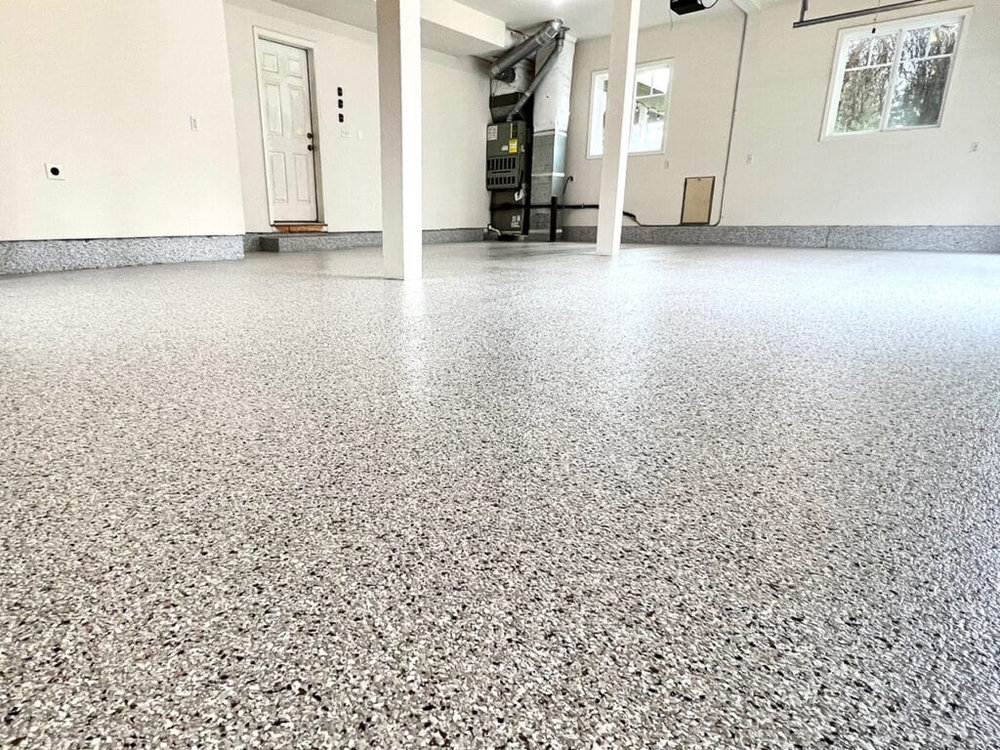
 BeforeAfter

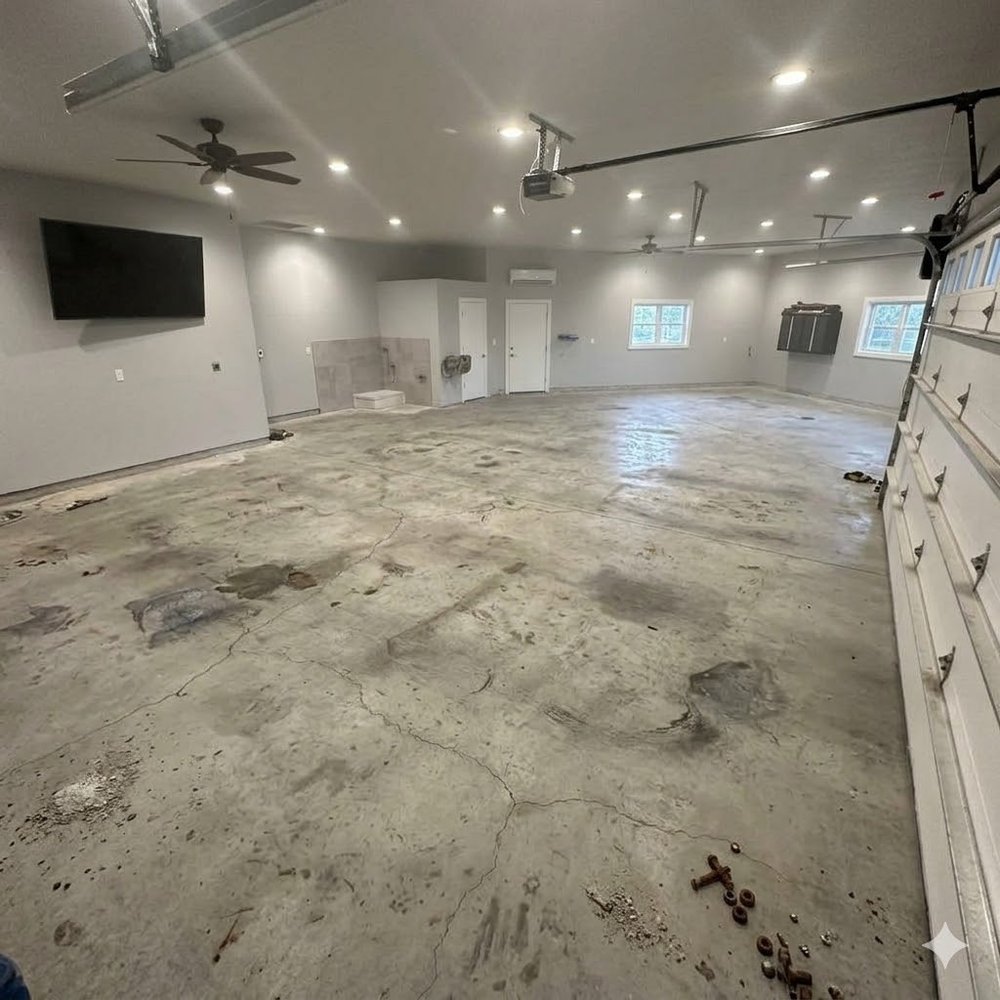 BeforeAfter
The agreed coating system determines the exact sequence. A clear scope covers preparation, application, curing and your return to the garage.
Review the slab, cracks, existing coating, contamination and moisture.
Prepare a surface profile suited to the specified coating system.
Address agreed repairs and joints, then clean the prepared surface.
Install the compatible primer or base layers in the agreed specification.
Broadcast flakes or apply the selected color and metallic treatment.
Remove excess flakes and refine the surface before the finishing coat.
Install the specified protective finish and traction additives, if selected.
Review the completed floor and provide care and return-to-use instructions.
Allow approximately 24 hours for light foot traffic and 48–72 hours for vehicles as an initial planning guide. The selected products and site conditions determine the actual timing; follow Mago’s instructions for your floor.
Winter salt, tracked-in water, changing temperatures and vehicle traffic belong in the planning conversation. Tell us about drainage, visible cracks, previous coatings and how you use the space.
Boston, Quincy, Newton, Cambridge, Brockton, Milton, Dedham, Worcester and surrounding Massachusetts communities. Rhode Island and New Hampshire projects are reviewed individually.
Explore our flooring service areas ↗Coating a basement? Explore basement epoxy ↗Also considering modular garage tile? ↗Mago’s planning ranges for approximately 400–500 square feet start at $3,000–$5,000 for Essential Epoxy, $4,000–$5,500+ for Performance Flake, $6,000–$8,500+ for Signature Garage and $6,000–$9,000+ for Metallic Epoxy. These are starting points for a conversation, not fixed quotes. Size, concrete condition, preparation, moisture treatment, repairs and finish selection determine the written estimate.
Service life depends on the specified system, preparation, slab condition, traffic and maintenance. Review the selected products, care requirements and any written warranty with Mago. A lifespan estimate is not a guarantee for every garage.
The coating needs to be specified for vehicle traffic and fully cured before parking. Ask about hot-tire resistance for the selected system and follow its return-to-use instructions.
Traction depends on the finish texture, additives and whether the surface is wet or contaminated. Flakes and traction additives can be included in the design; discuss the balance between grip and cleaning before choosing a finish.
Mago evaluates the existing coating’s condition, adhesion and compatibility. Removal by mechanical grinding may be needed before installing the new system.
Allow about 24 hours for light foot traffic and 48–72 hours for vehicles. Actual timing depends on the coating, temperature, humidity and site conditions. Follow the project-specific instructions before returning the garage to use.
Yes. The slab is reviewed before coating. Cracks, joints, contamination and moisture may require repairs or a specified treatment. Structural movement and ongoing water problems need assessment; a decorative coating does not resolve every underlying issue.
Massachusetts is the primary service area, including Boston, Quincy, Newton, Cambridge, Brockton, Milton, Dedham, Worcester and surrounding communities. Rhode Island and New Hampshire projects are considered individually based on location, scope and timing.
Share your town, approximate size, a few photos and the finish you have in mind. We’ll review what your garage needs before confirming the estimate.
Tell us what you have in mind. We’ll review your space, materials and installation needs to help define your next steps.
Massachusetts · Qualifying projects in Rhode Island & New HampshireShare your town, approximate floor area
and preferred timing to get started.