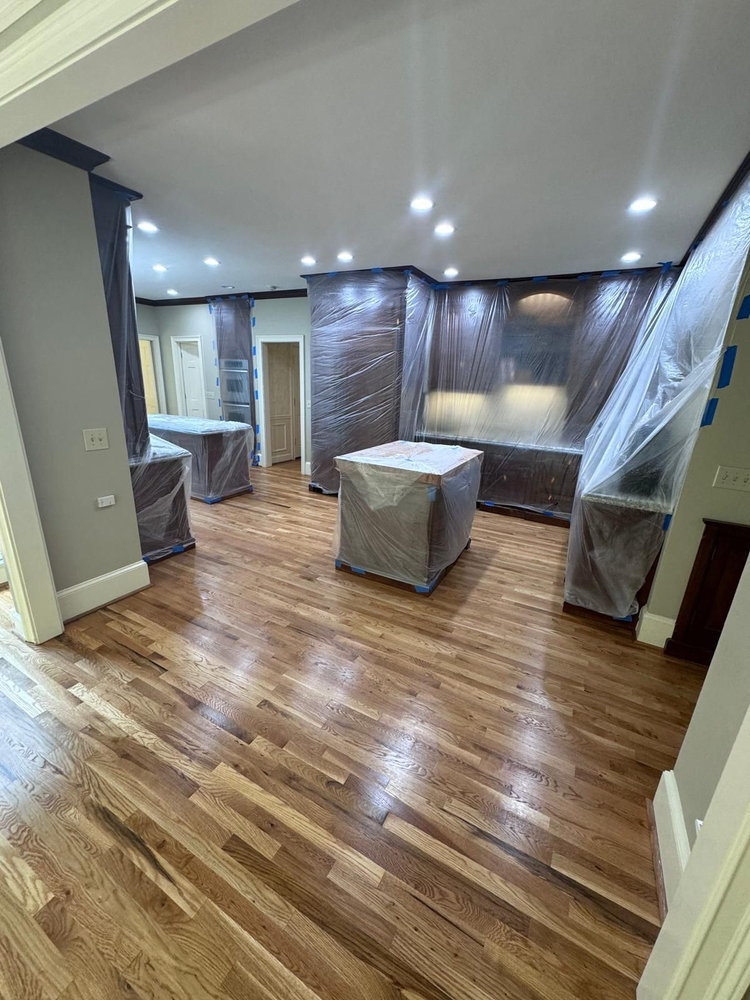
Walking into the second-floor unit of a 1920s Brookline triple-decker, the floors were almost black with old finish, scarred from decades of furniture, and cupping near the radiators.
The Discovery
Underneath layers of darkened polyurethane was original red oak, narrow strip, in remarkable condition.
The Plan
We mapped cupped sections, replaced two damaged boards, and weave-patched a missing section using salvaged boards from under built-ins.
The Stain Decision
The owner wanted to honor the home's age without going dark. We landed on a custom mix — slightly warmer than natural, with a touch of brown to mute the orange tone red oak develops over time.
The best refinishing jobs don't look like new floors. They look like the floors the house was always supposed to have.
Finish
Three coats of water-based polyurethane in satin. Less yellowing than oil-based, faster cure, and closer to the matte look the owner remembered from her grandmother's house.
← Back to all articles