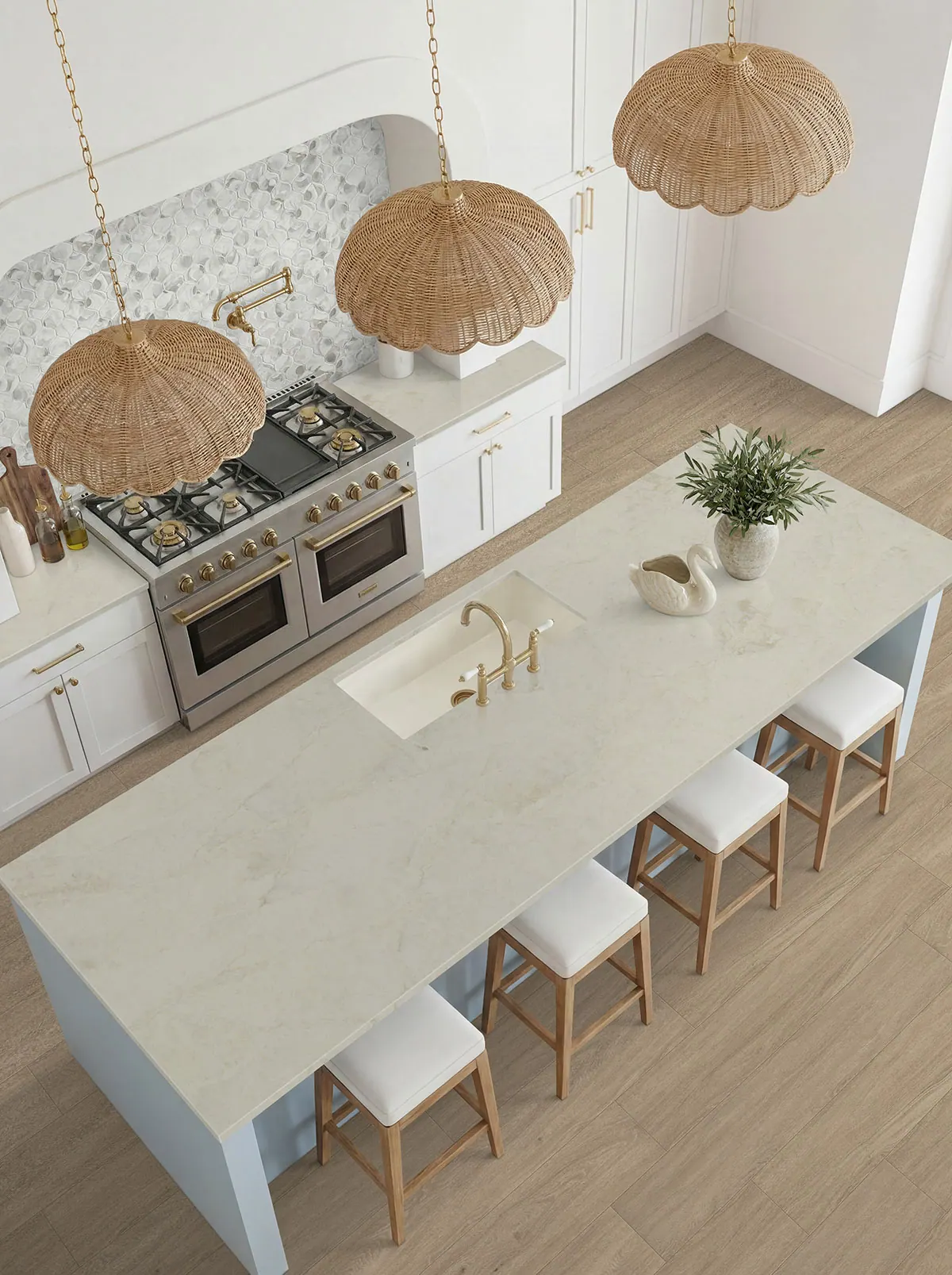
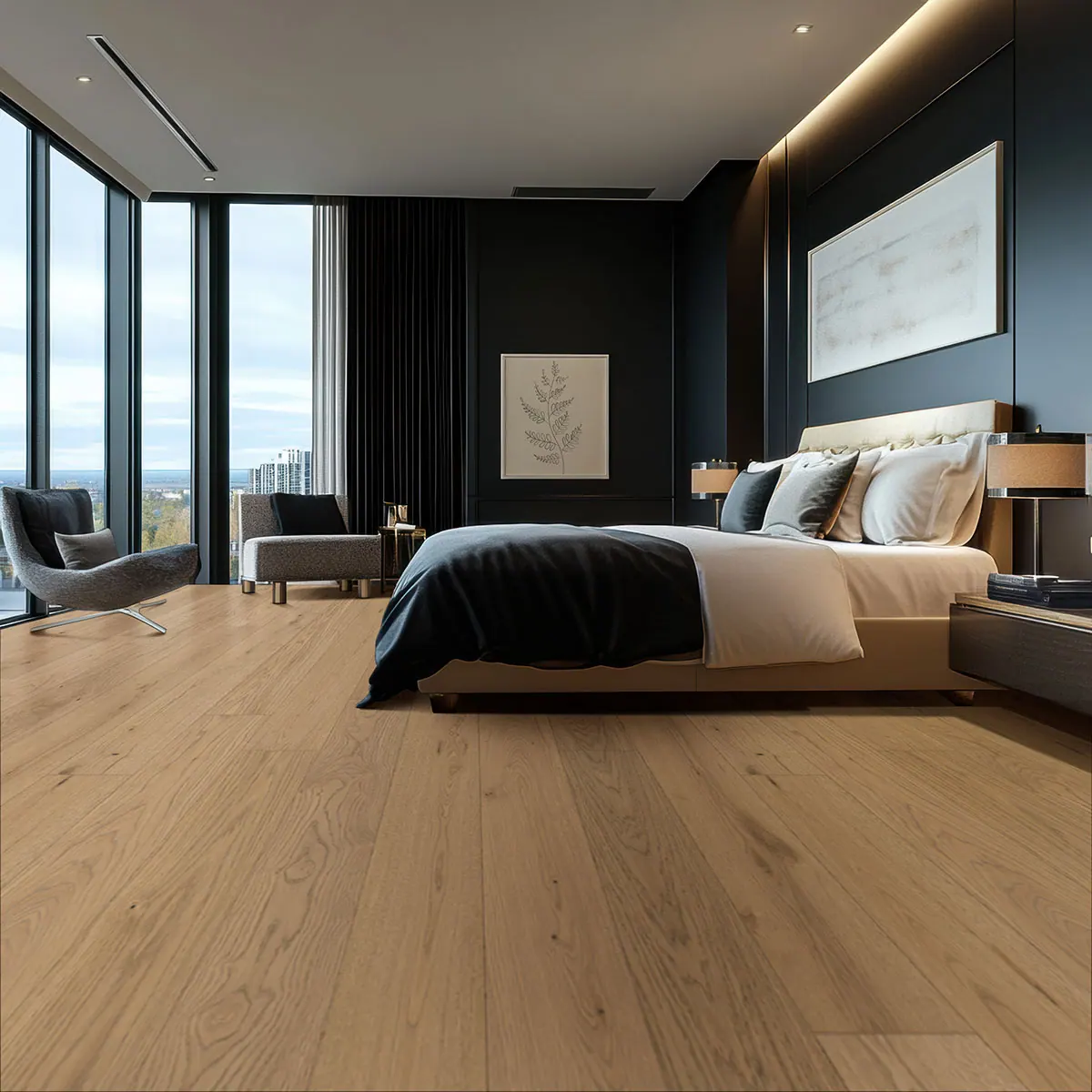
Engineered wood offers a real wood surface with a layered construction. The useful comparison is not simply “solid versus engineered,” but which product fits your room, installation plan and expectations for future care.
Understand the construction
Engineered wood has real wood on top of a supporting construction. Depending on the product, that backing may use wood layers or composite materials. Engineered flooring generally moves less with environmental changes than solid wood, but it still needs appropriate indoor conditions. See the NWFA’s explanation of wood flooring types.
Start a comparison sheet for two or three products. Record the species, surface thickness when published, total thickness, core construction, board dimensions, edge profile and finish. Include the exact product code. If a specification is missing, ask for the manufacturer’s technical sheet instead of filling the gap with an assumption.
A wood-look vinyl plank is a different material from engineered wood. If having a real wood surface matters to you, verify the construction in the listing rather than relying on the photograph or the collection’s name.
The wood surface and future refinishing
Overall thickness includes the supporting layers; the wood above them is a separate specification. Future sanding depends on the available wood, floor condition, flatness and previous refinishing. A thick-looking board does not establish how many times it can be sanded. The NWFA outlines these limits in its refinishing guidance.
If refinishing is part of your long-term plan, ask the manufacturer whether the exact product is suitable and keep the answer with the warranty. Ask a refinisher to assess the floor before promising a future color change. Also distinguish sanding from recoating: renewing a compatible surface finish is a different scope of work.
Compare the appearance you want now as well. Ask to see the range of boards, not only the most uniform sample. Put your shortlist against cabinets and paint colors, and view it at different times of day. Record what you prefer about each option so you can weigh appearance alongside the technical details.
Match the floor to the room
Some engineered products can be used below grade or over radiant heating, subject to product-specific conditions. This is not permission to put every engineered floor in every basement or on every heating system. Mannington’s hardwood installation guidance, for example, sets out substrate, heating and product restrictions.
Tell the installer whether the room is over concrete, over a crawl space or on an upper floor. Include previous leaks, direct sun, underfloor heating and any building sound requirements. For an apartment or condominium, request the building’s flooring rules before buying underlayment. Ask which tested floor assembly meets those rules, rather than comparing sound-rating numbers without their test conditions.
Some specialty wood products carry water-related claims. Read what the specific warranty covers, including installation requirements and exclusions. Do not extend one collection’s claim to all engineered wood or assume a surface claim solves a moisture problem beneath the floor.
Preparation and moisture come first
Agree on an inspection before the final installation schedule. Ask how the subfloor will be checked for soundness, flatness and moisture, and how incompatible coatings or residues will be handled if the floor is glued. Any moisture-control materials, adhesive and underlayment must work as an approved system. The manufacturer’s installation instructions illustrate why these choices depend on the actual product.
Conditioning instructions also vary. Follow the selected manufacturer’s guidance on room conditions, storage and acclimation rather than transferring a rule from another wood floor. The NWFA installation guidelines provide broader background on jobsite assessment.
Ask for test results and preparation notes with your project records. If someone suggests skipping a required step because a floor “looks dry,” request an explanation tied to the product instructions. Decide how unexpected preparation costs will be approved before installation begins.
Floating, glue-down or fastening?
Engineered wood products may allow different installation methods. The choices belong to the exact flooring and substrate; a click joint, tongue-and-groove profile or attached backing should not be treated as interchangeable. Check the approved method before ordering supplies. Mannington’s installation resources are one example of method-specific guidance.
Ask your installer to explain the proposed assembly in plain language: what attaches to what, which materials go beneath the floor, where transitions are needed and how movement is accommodated. Discuss doors, cabinets, stairs and adjoining floor heights early. Those details belong on the material list as well as the installation plan.
For a floating installation, get clear instructions about fixed objects and expansion space. For a glued installation, confirm the adhesive and the conditions it requires. For fastening, confirm the suitable substrate and specified fasteners. Use the current instructions for your selected product for the actual dimensions and procedure.
Plan quantities and the full cost
Measure each connected area and identify the planned layout. Ask the installer to recommend a cut allowance, then round up to whole cartons using the listed box coverage. Include transitions, stair components and compatible installation materials in the comparison. Two floors with a similar square-foot price can produce different project totals.
Keep removal, preparation, flooring, installation and delivery visible as separate lines in the estimate. Ask about access, furniture and waste disposal. Do not lock in labor based only on an expected arrival date; confirm material availability, delivery and the room’s readiness first.
Browse engineered wood and use the material project builder to organize the pieces. For installation, request a separate project estimate; service eligibility depends on location and scope.
Care for engineered wood as wood
Remove loose dirt regularly, wipe spills promptly and use a cleaner appropriate for the finish. Avoid wet and steam mops. The layered construction does not change the need to care for the wood surface. The NWFA’s wood-floor maintenance guide applies these habits to everyday care.
Follow the manufacturer’s indoor humidity and temperature requirements. Changes in moisture can affect wood even after a successful installation; see the NWFA’s problem-prevention guidance. Check furniture pads, keep the approved care instructions accessible and retain a labeled spare board or carton if practical for your project.
Questions people ask before buying
Is engineered wood real wood?
Yes, its surface is real wood. The core and backing construction vary by product. Check the technical sheet to understand the complete board.
Can every engineered floor be refinished?
No. Confirm the manufacturer’s guidance and have a professional assess the remaining surface and condition. Do not estimate refinishing capacity from total thickness alone.
Can I use any underlayment?
No. Confirm the flooring manufacturer’s approved assembly and any building sound requirements before purchasing extra layers.